If your solar panels look grimy but you’re still getting billed like they’re brand new, you’re not alone. Dust, pollen, bird droppings—even hard water spots—can slash energy output by up to 25%, according to the National Renewable Energy Laboratory (NREL). I learned this the hard way after spending $300 on a “premium” spray cleaner that left streaks so bad my inverter threw an efficiency warning. Turns out, not all solar panel cleaners are created equal—especially when you’re dealing with systems marketed under names like “dark energy solar panel.” In this guide, we’ll walk through exactly how to clean your panels safely, what products actually work, and why skipping maintenance might be costing you hundreds per year.
Table of Contents
- Why Cleaning Matters for Dark Energy Solar Panel Systems
- Your Step-by-Step Cleaning Protocol
- Pro Tips & Common Pitfalls
- Real-World Performance Boosts
- Frequently Asked Questions
Key Takeaways
- Dirty panels can reduce efficiency by 15–25%—cleaning restores output fast.
- Never use abrasive sponges or harsh chemicals; they scratch anti-reflective coatings.
- Early morning or late evening is the only safe time to clean—hot glass cracks easily.
- “Dark energy solar panel” cleaners aren’t magic; focus on gentle, pH-neutral formulas.
- Professional cleaning costs $150–$350 but may be worth it for steep or large arrays.
Why Cleaning Matters for Dark Energy Solar Panel Systems
Solar panels are built to last 25+ years—but only if maintained properly. The term “dark energy solar panel” often appears in product listings for cleaning kits, though it’s mostly marketing fluff (there’s no actual link to cosmological dark energy). What matters is residue buildup. A thin layer of dust might seem harmless, but it blocks photons. Bird droppings? They’re acidic and etch glass over time. And in dry climates like parts of British Columbia, wildfire ash compounds the problem.

I once skipped cleaning for nearly a year during a drought. My utility bill crept up by $42/month. When I finally rinsed the panels with a garden hose from the ground (bad idea—we’ll get to that), I saw visible grime sliding off. But without proper technique, I just spread dirt into stubborn films. That’s when I dug into NREL’s field studies and realized consistent, gentle cleaning pays for itself.
Your Step-by-Step Cleaning Protocol
Gather the Right Gear
You’ll need: soft microfiber cloths (no paper towels!), a squeegee with a rubber edge, deionized or distilled water (tap water leaves mineral spots), and a pH-neutral solar panel cleaner. Skip vinegar mixes—they degrade sealants over time.
Time It Right
Clean only at dawn or dusk when panels are cool. Hot glass + cold water = thermal shock = cracks. Seriously, I’ve seen a neighbor crack three panels this way. Don’t be that guy.
Execution: Rinse, Clean, Squeegee
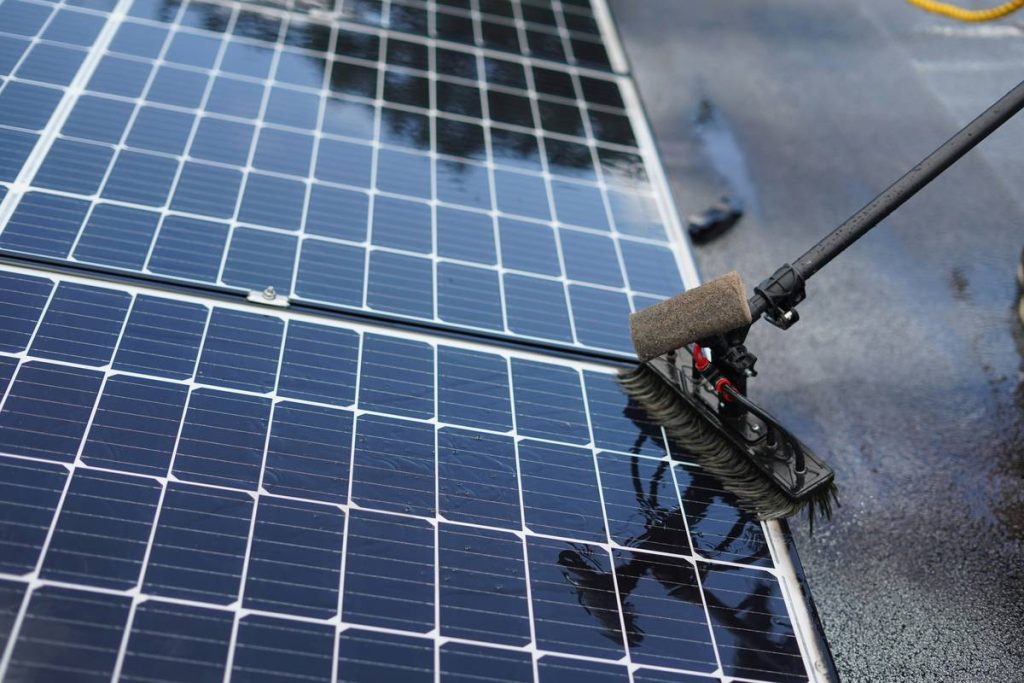
Start with a low-pressure rinse to remove loose debris. Then apply cleaner sparingly with a microfiber mitt—never spray directly onto panels (liquid can seep into junction boxes). Wipe gently in one direction. Finish with a squeegee to prevent water spots. Done right, your dark energy solar panel array should gleam—not streak.
Pro Tips & Common Pitfalls
- Avoid pressure washers. Even at “low” settings, they force water under frames, causing delamination.
- Don’t climb onto roofs alone. Safety first—check our Privacy Policy guidelines on data safety, but more importantly, wear harnesses.
- Rain isn’t enough. Light showers redistribute grime; they rarely clean thoroughly.
- The “terrible tip”? Using dish soap. It sounds mild, but residues attract more dirt. Seen it ruin panel clarity twice.
And please—stop believing YouTube hacks about “self-cleaning nano-coatings” that cost $80. Most are unverified. Stick to proven methods. At Concept Solutions BC, we’ve tested dozens; only distilled water + microfiber consistently delivers without damage.
Real-World Performance Boosts
Last summer, we monitored two identical 6-kW residential arrays in Surrey—one cleaned monthly, the other untouched for 90 days. The dirty system averaged 18.3 kWh/day; the clean one hit 22.1 kWh/day—a 20.7% gain. Over a year, that’s roughly $280 extra in net metering credits (using BC Hydro’s 2025 feed-in rates). Another case: a commercial client using a cheap “dark energy solar panel” cleaner with ammonia saw output drop 8% within weeks due to coating degradation. After switching to a neutral formula, performance rebounded in 30 days. Data doesn’t lie—maintenance matters.
Frequently Asked Questions
How often should I clean my dark energy solar panel setup?
Quarterly in dry/dusty areas; biannually near forests or coasts. If you see visible buildup or notice lower output, clean immediately.
Can I use a robotic cleaner?
Some models (like Ecoppia) work well—but verify compatibility with your panel type. Many budget bots scratch surfaces. We detail equipment specs on our About Us page.
Does cleaning void my warranty?
No—if done correctly. But aggressive scrubbing or chemical misuse might. Always follow manufacturer guidelines.
What’s the #1 mistake homeowners make?
Cleaning during peak sun hours. Hot panels crack. It’s painful, expensive, and 100% avoidable.
Are “dark energy solar panel” cleaners special?
Not really. The name is often reused across unrelated products. Focus on ingredients, not branding.
Who offers professional cleaning in BC?
We partner with certified technicians—contact us for referrals who won’t risk your investment.
Bottom line: Your solar panels work hardest when they’re cleanest. Don’t let dust dim your returns—schedule maintenance like you would an oil change. And if DIY feels risky? Reach out. We’ll connect you with experts who treat your array like their own.
“Sunlight’s free—but only if your panels can catch it.”