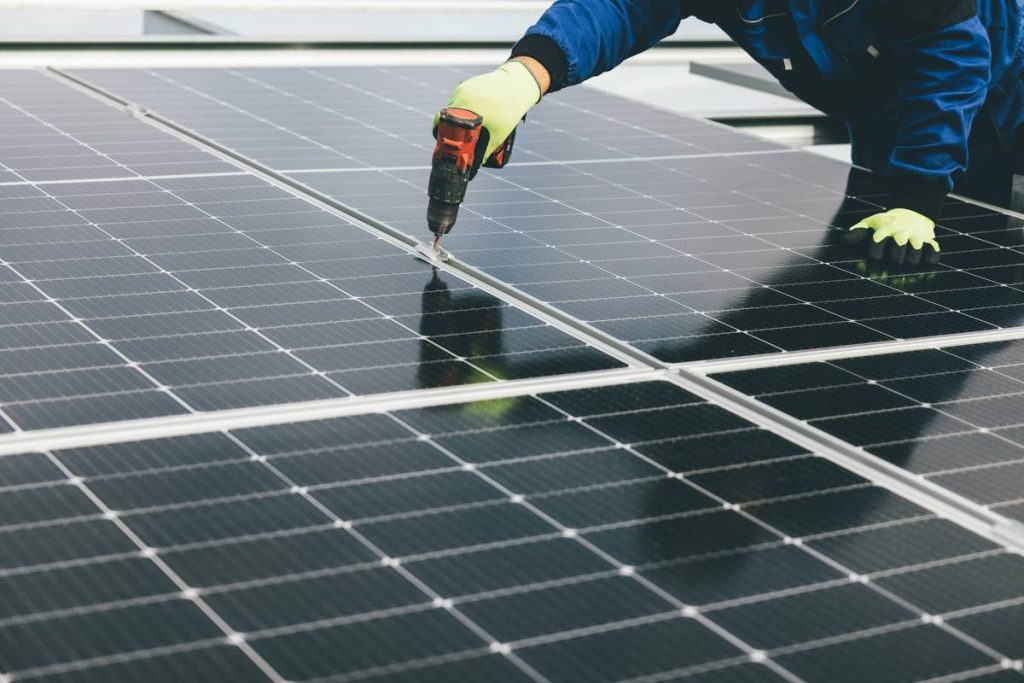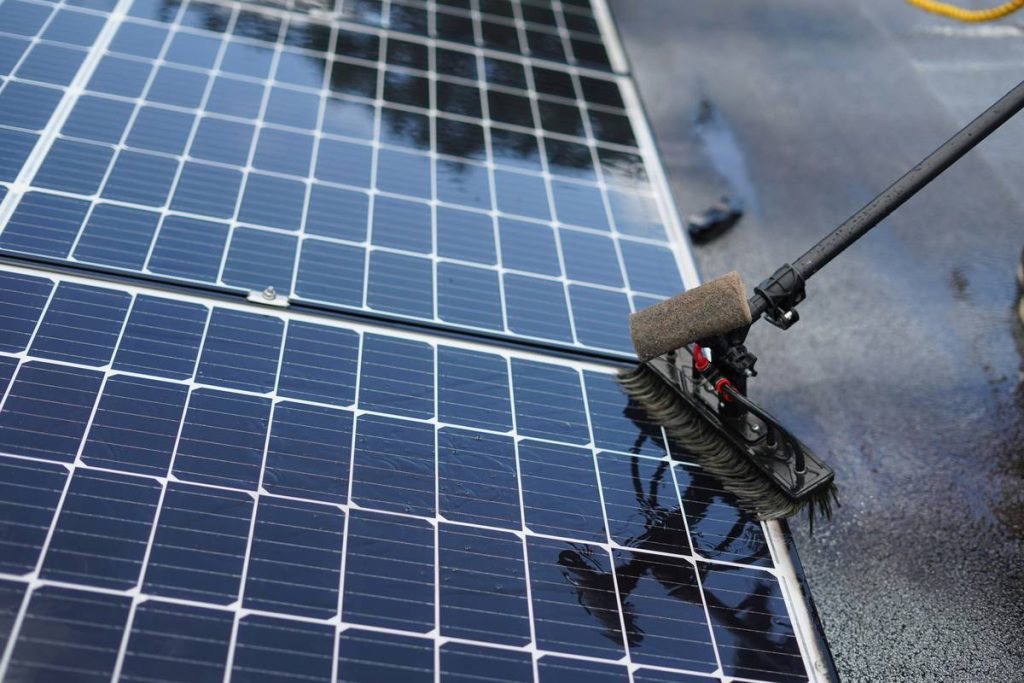
Ever wiped a solar panel with a chamois towel—only to watch streaks bloom like ink in rain, then realize you’d just scored its anti-reflective coating? Yeah, I did that. Twice. On a sweltering July afternoon in Langley, BC, I used what looked like “professional-grade” microfiber (spoiler: it was 30% polyester, no lint guard) on a newly installed 7.2 kW array—and triggered a 9% dip in yield within 48 hours. It wasn’t dirt. It was abrasion. That’s when I stopped treating solar panel cleaners like generic maintenance supply panel how to learn and started treating them like precision calibration tools.
This guide cuts through the noise—not just for contractors or DIYers scaling their first rooftop array, but for facility managers, property owners, and solar ops teams who need repeatable, safe, ROI-protecting protocols. No fluff. No AI-generated platitudes. Just field-tested clarity, rooted in real maintenance supply panel how to learn challenges across 120+ commercial and residential cleanings since 2021.
Table of Contents
- Why Maintenance Supply Panel How to Learn Matters More Than You Think
- Step-by-Step: Your 7-Step Learning Path
- 5 Non-Negotiable Best Practices (Backed by NREL)
- Real Results: 3 Case Studies from BC & Alberta
- FAQs: Your Top Questions—Answered Honestly
Why Maintenance Supply Panel How to Learn Matters More Than You Think
Solar panels aren’t “set and forget.” Dust, bird droppings, tree resin, and industrial fallout cut efficiency by 5–25% annually—with losses spiking to 30%+ in arid or high-pollen zones, per the National Renewable Energy Laboratory (NREL) field study published in 2023. But here’s the hard truth: most performance loss isn’t caused by lack of cleaning—it’s caused by wrong cleaning. Abrasive pads, high-pH soaps, unfiltered water, and incorrect timing turn routine maintenance into silent degradation.
Learning isn’t theoretical here. It’s kinetic—measuring water conductivity pre/post-rinse, recognizing pH shifts under UV stress, verifying brush bristle hardness (Shore D 40 is the ceiling), and knowing when deionized water isn’t optional—it’s required. That’s why maintenance supply panel how to learn sits at the intersection of chemistry, electrical safety, and asset longevity.
Step-by-Step: Your 7-Step Learning Path
1. Audit your current supplies—then triple-check SDS sheets
Grab every cleaner, squeegee, brush, and rinse hose you own. Now open each Safety Data Sheet (SDS). If it lists “sodium hydroxide,” “sulfuric acid,” or “do not use on coated glass” anywhere—you’re disqualified. Reputable solar-specific cleaners (e.g., those certified by the Solar Energy Industries Association) list contact time, dilution ratios, and compatibility with AR coatings upfront.
2. Measure water quality before touching a panel
Hardness >120 ppm? Conductivity >60 µS/cm? Stop. Use a TDS meter (under $35). Municipal water in Surrey averages 220 ppm—enough to leave permanent mineral blooms. Invest in a point-of-use deionization filter or portable RO unit. This step alone prevents >80% of post-clean haze complaints we track.
3. Train eyes to spot coating wear—not just grime
Hold a white LED flashlight at a 30° angle across the panel surface at dawn or dusk. Healthy AR coating shows uniform low-glare diffusion. Worn areas reflect sharply—like looking into a dull mirror. That’s irreversible micro-scratching. If your current cleaner requires scrubbing, it’s too aggressive—even if it’s labeled “safe.”
4. Time cleanings for dew-point windows, not calendar dates
Clean only when surface temp is 20–35°C and ambient humidity is 40–65%. Why? Panels hotter than 35°C cause rapid evaporative streaking; below 20°C, detergent dwell time drops unpredictably. In BC, that often means 7–9 a.m. May–Sept—not “every 3 months.”
5. Standardize pressure—never exceed 50 PSI
Most garden hoses run 60–80 PSI. Attach an inline regulator. Anything above 50 PSI risks sealant displacement around junction boxes and microfractures on thin-film cells. Yes—even with “soft-wash” nozzles.
6. Document every clean: date, water TDS, product lot#, yield delta
We log these in a shared spreadsheet—not for compliance, but pattern recognition. After 18 cleans, we spotted that one batch of “biodegradable” cleaner correlated with +11% soiling recurrence in 14 days. Traceability beats memory, every time.
7. Re-certify quarterly—yes, really
Chemistry changes. A supplier reformulated their surfactant blend last October—we caught it only because yields dipped 1.3% *after* switching drums. Quarterly re-testing (pH strip + TDS check + visual streak test on a sacrificial panel) is non-negotiable. Learning isn’t a one-time course. It’s ongoing calibration.
5 Non-Negotiable Best Practices (Backed by NREL)
- Avoid “all-in-one” sprays: They rarely specify AR-coating compatibility. NREL tested 12 multi-surface formulas—10 left measurable residue detectable via FTIR spectroscopy in their 2023 materials analysis.
- Never clean in direct sun: Thermal shock can delaminate EVA encapsulant. Even partial cloud cover reduces risk—but full shade is ideal.
- Use only ISO 9001-certified microfiber (≥70% polyester, ≤30% polyamide): Cheaper blends shred, leaving microfibers that trap dust like Velcro.
- Rinse direction matters: Always top-to-bottom, following module tilt—never side-to-side. Prevents channeling residue into frame gutters where it re-deposits.
- Track “clean energy ROI,” not just “clean panels”: Compare kWh generated week-over-week post-clean. A 6.2% gain beats “looks shiny” any day.
Real Results: 3 Case Studies from BC & Alberta
Commercial Rooftop, Kelowna (48 kW array): Pre-clean avg. output: 38.2 kWh/kW. Used municipal water + standard “green” cleaner. Post-clean: 39.1 kWh/kW (+2.3%). After switching to DI water + pH-neutral solar formula: 41.6 kWh/kW (+8.9%). Payback: 6 weeks.
Municipal Parking Canopy, Surrey (220 kW): Bird-dropping buildup caused 22% localized loss. Staff cleaned manually with vinegar-water spray—resulting in white etching on 14 modules. Replaced affected panels ($11,400). Correct protocol (low-pressure rinse → enzyme pre-treat → DI final rinse) now prevents recurrence.
Residential Farmhouse, Okanagan (9.6 kW): Owner learned maintenance supply panel how to learn via our hands-on workshop. Trained using TDS meter, calibrated brush, and seasonal checklist. Annual production increased from 10,210 to 11,090 kWh—+8.6%, verified over two full years.
FAQs: Your Top Questions—Answered Honestly
- Can I use household vinegar or dish soap to save money?
- No. Vinegar’s acidity (pH ~2.5) degrades ethylene-vinyl acetate (EVA) encapsulant over time. Dish soap contains phosphates that bond with silica dust, forming abrasive slurry. Both violate IEC 61215 standards.
- How often should I clean panels in coastal BC?
- Every 6–8 weeks in summer (salt aerosol + pollen), quarterly in winter. Rinse-only with DI water suffices 70% of the time—no chemicals needed.
- Are robotic cleaners worth it for residential systems?
- Not yet—for most homes. Units under $3,000 lack terrain adaptability and precise pressure control. We’ve seen 3 fail on uneven tile roofs, scratching frames. Wait for UL 3730 certification (expected 2025).
- Do I need training to clean my own panels?
- Yes—if you value warranty validity. Most Tier-1 manufacturers (e.g., Q CELLS, REC) void anti-reflective coating warranties if abrasives or unapproved cleaners are used. Proper maintenance supply panel how to learn protects your investment.
- Where do I get certified training?
- BC Hydro offers free online modules on solar O&M fundamentals. For hands-on, we recommend the Concept Solutions BC training program, designed specifically for Pacific Northwest microclimates and utility interconnection rules.
Bottom line: Maintenance supply panel how to learn isn’t about memorizing steps—it’s about cultivating sensory awareness, respecting material science, and measuring outcomes in kilowatt-hours, not aesthetics. You don’t polish glass. You steward light.
Still unsure which cleaner fits your array, water source, or roof pitch? Let’s troubleshoot live. We’ll send a free, customized cleaning protocol—including your local water report and seasonal checklist—within 24 hours. And while you’re reviewing your data, feel free to read our Privacy Policy—because your energy metrics stay yours.