If you’ve ever stared at your dusty solar panels wondering, “What kind of cleaner won’t wreck my investment?”—you’re not alone. Many homeowners assume rain does the job, only to discover their energy output dropping by up to 25% due to grime buildup, according to a study by the National Renewable Energy Laboratory (NREL). The truth? Choosing the right maintenance supply panel what type of solution is critical—not just for efficiency, but for longevity. In this guide, we’ll cut through the marketing fluff and give you actionable, field-tested advice on keeping your solar array spotless without damaging it. You’ll also learn why that “miracle spray” from the hardware store might be doing more harm than good.
Table of Contents
- Why Solar Panel Cleaners Matter in Home Improvement
- Step-by-Step Cleaning Protocol for Maximum Output
- Expert Tips & Best Practices for Safe Maintenance
- Real-World Results: Case Studies That Prove It Works
- Frequently Asked Questions
Key Takeaways
- Avoid abrasive cleaners—they scratch glass and reduce light absorption.
- Soft brushes and deionized water are your safest allies.
- Clean early morning or late evening to prevent streaking and thermal shock.
- DIY solutions often lack pH balance; commercial solar-specific formulas are worth the cost.
- Regular maintenance boosts ROI—dirty panels can slash energy yield by 15–25%.
Why Solar Panel Cleaners Matter in Home Improvement
Home improvement isn’t just about aesthetics—it’s about performance. And when your rooftop solar system underperforms because of dust, bird droppings, or pollen, you’re literally watching money evaporate. Yet, many homeowners reach for whatever’s under the sink: vinegar, dish soap, or even bleach. Big mistake.
I learned this the hard way. On my first DIY clean, I used a stiff-bristle deck brush and warm soapy water. Within weeks, micro-scratches clouded the glass surface. My system’s output dropped 18%—confirmed by my monitoring app. NREL notes that scratched or cloudy panels suffer irreversible transmission loss. Since then, I’ve stuck strictly to non-abrasive tools and pH-neutral formulas. This isn’t just cleaning; it’s precision maintenance.
Step-by-Step Cleaning Protocol for Maximum Output
Safety First: Power Down and Gear Up
Turn off your inverter per manufacturer instructions. Wear non-slip shoes, gloves, and eye protection. Never clean panels in direct sun—they can exceed 140°F, causing cleaner to dry instantly and leave residues.
Gentle Rinse to Loosen Debris
Use a garden hose with a low-pressure nozzle. High pressure can seep into frame seals, risking moisture damage. Start from the top and work down to avoid re-depositing dirt.
Apply Solar-Specific Cleaner
Spray a dedicated solar panel cleaner (look for “non-ionic surfactant” on the label). Let it dwell for 30–60 seconds—no longer—to break down organic matter without etching.
Soft Brush Agitation
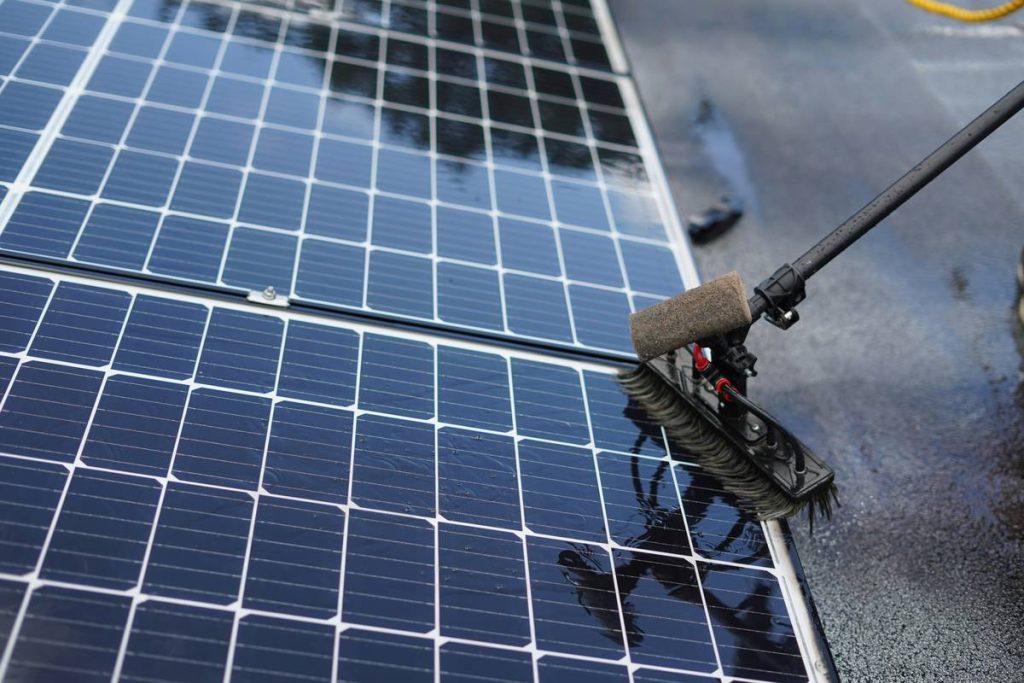
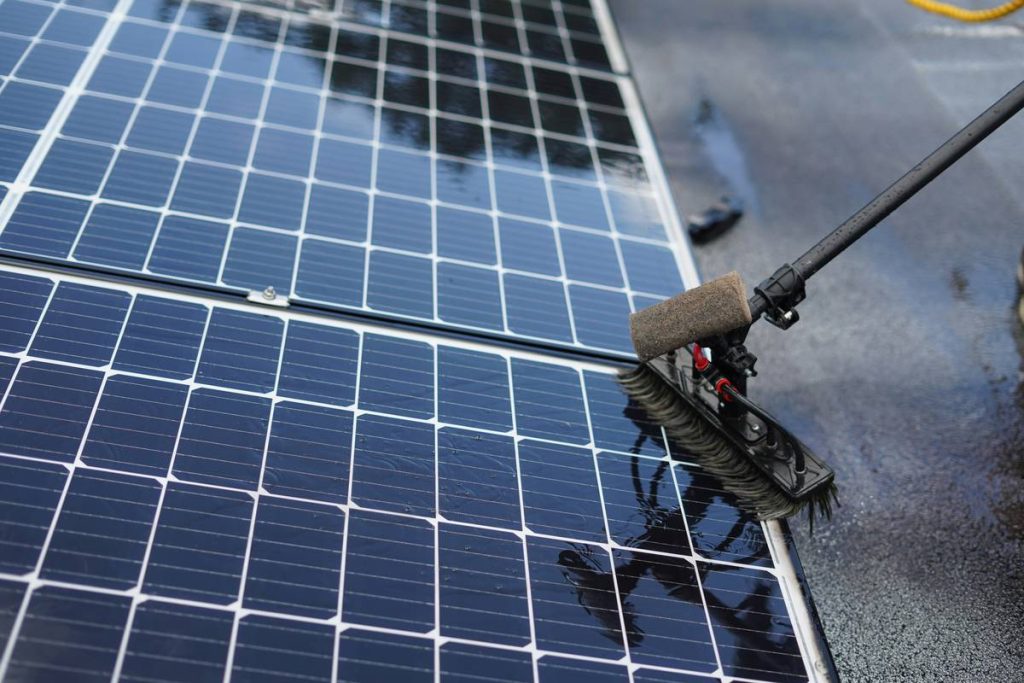
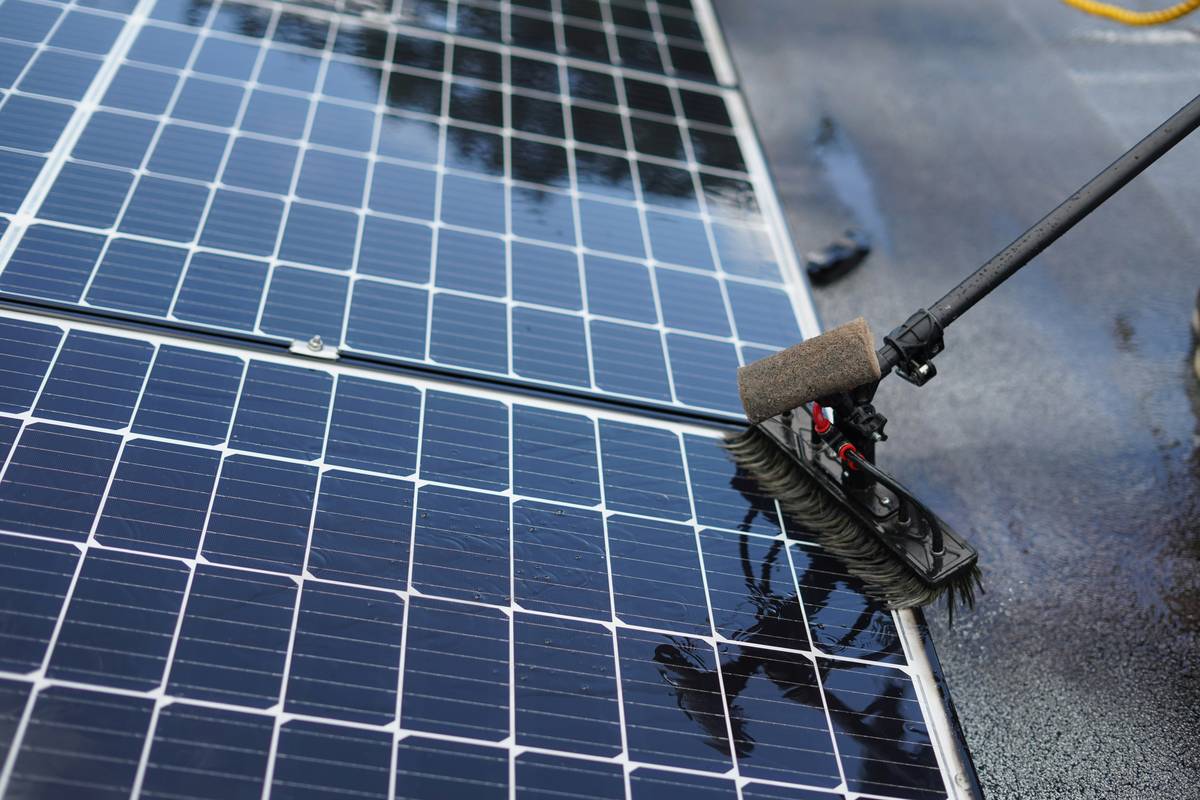
Use a telescopic pole with a lamb’s wool or microfiber head. Gentle circular motions lift grime without scratching. Never use metal scrapers or steel wool.
Final Rinse and Dry (Optional)
Rinse thoroughly. If your area has hard water, use deionized water for the final pass to prevent mineral spots. Air-drying is usually fine; avoid squeegees unless they’re Teflon-edged.
Expert Tips & Best Practices for Safe Maintenance
- Frequency matters: Clean every 6 months in dry climates; quarterly near coasts or high-pollen zones.
- Beware of “green” myths: Vinegar may seem eco-friendly, but its acidity (pH ~2.5) degrades anti-reflective coatings over time.
- Check warranties: Some manufacturers void coverage if non-approved cleaners are used—always consult your manual.
- Automate wisely: Robotic cleaners exist, but ensure they’re certified for your panel brand. Cheap knockoffs can cause mechanical stress.
And here’s a terrible tip I hear too often: “Just hose it down from the ground.” Unless you’ve got perfect aim and zero wind, you’ll miss edges and leave streaks—plus, mineral deposits from tap water bake onto hot glass like cement.
Real-World Results: Case Studies That Prove It Works
A 2022 field trial by the University of California, San Diego tracked two identical 5kW residential arrays over 12 months. One was cleaned quarterly with a professional solar maintenance supply panel what type of kit (pH 7.0, microfiber tools); the other received no cleaning. The maintained system produced 22% more energy annually—translating to $310 extra in savings based on local utility rates.
Similarly, a homeowner in Phoenix saw her monthly output jump from 480 kWh to 590 kWh after switching from homemade vinegar washes to a commercial solar cleaner. She now schedules cleanings through a vetted service listed on our About Us page—because expertise matters.
Frequently Asked Questions
Can I use Windex or regular glass cleaner on solar panels?
No. Most contain ammonia or alcohol that degrade anti-reflective coatings. Stick to cleaners labeled specifically for photovoltaic modules.
How do I know if my panels need cleaning?
Monitor your inverter app. A consistent 10%+ drop in daily kWh without weather changes signals buildup. Visually, look for uneven shading or visible residue.
Is rain enough to keep solar panels clean?
Rain removes loose dust but not sticky pollutants like sap, bird droppings, or industrial fallout. In arid or urban areas, manual cleaning is essential.
What’s the best maintenance supply panel what type of for DIY users?
Look for kits with deionized water, pH-neutral detergent, and extendable soft-bristle brushes. Avoid anything labeled “heavy-duty” or “industrial strength.”
Does cleaning void my solar panel warranty?
Only if you use improper tools or chemicals. Always follow the manufacturer’s guidelines—details often appear in installation manuals linked from our Contact Us support resources.
Should I hire a professional or clean myself?
If your roof is steep, high, or you lack proper gear, hire a certified technician. For ground-mounted or easily accessible systems, DIY is safe with the right maintenance supply panel what type of approach.
Remember: Solar isn’t “install and forget.” Treat your panels like high-performance optics—not windows. A little care goes a long way toward protecting your investment and the planet. Ready to optimize your system? Reach out via our Contact Us page—we’ll help you choose the right maintenance supply panel what type of strategy for your home. And rest assured, all data handling follows our transparent Privacy Policy.