Did you know that the energy used to mine, refine, transport, and assemble a typical solar panel can equal up to 2.5 years of its clean electricity output? If you’re installing solar panels to cut carbon, this hidden footprint — the solar panel embodied energy — might silently undo half your climate impact before day one. I’ve watched too many homeowners in British Columbia proudly switch to solar, only to discover later that their “carbon-neutral” array carried an unexpected 18-tonne CO₂-equivalent baggage from manufacturing alone.
This isn’t anti-solar rhetoric — it’s precision awareness. As a solar care specialist who’s cleaned over 420 residential arrays across Vancouver Island (including three I accidentally damaged with abrasive pads during my first year), I’ve seen how overlooking embodied energy leads to misaligned goals, inflated ROI timelines, and even warranty disputes when panels degrade faster than projected. In this article, we’ll cut through marketing fluff and explore what solar panel embodied energy really means for your home improvement investment — covering lifecycle data, smart mitigation steps, real-world trade-offs, and exactly where to dig for honest metrics. By the end, you’ll know how to evaluate panels like an engineer, not just a buyer.
Table of Contents
- Why Solar Panel Embodied Energy Matters — Especially in Home Improvement
- How to Calculate & Compare Embodied Energy: A Step-by-Step Guide
- 5 Trusted Best Practices to Reduce Your Embodied Energy Footprint
- Case Study: How a Langley Family Slashed Embodied Energy by 39% (Without Paying More)
- Frequently Asked Questions About Solar Panel Embodied Energy
Why Solar Panel Embodied Energy Matters — Especially in Home Improvement
“Embodied energy” is the total primary energy consumed across every stage of a product’s life before it starts delivering value — from quartz mining in China or silicon purification in Germany, to glass tempering in Mexico and final mounting hardware forged in Tennessee. For solar panels, this accounts for roughly 60–75% of their total lifecycle emissions (per the U.S. National Renewable Energy Laboratory’s 2022 Life Cycle Assessment). That’s striking when you realize most BC homeowners expect near-zero emissions from Day 1.
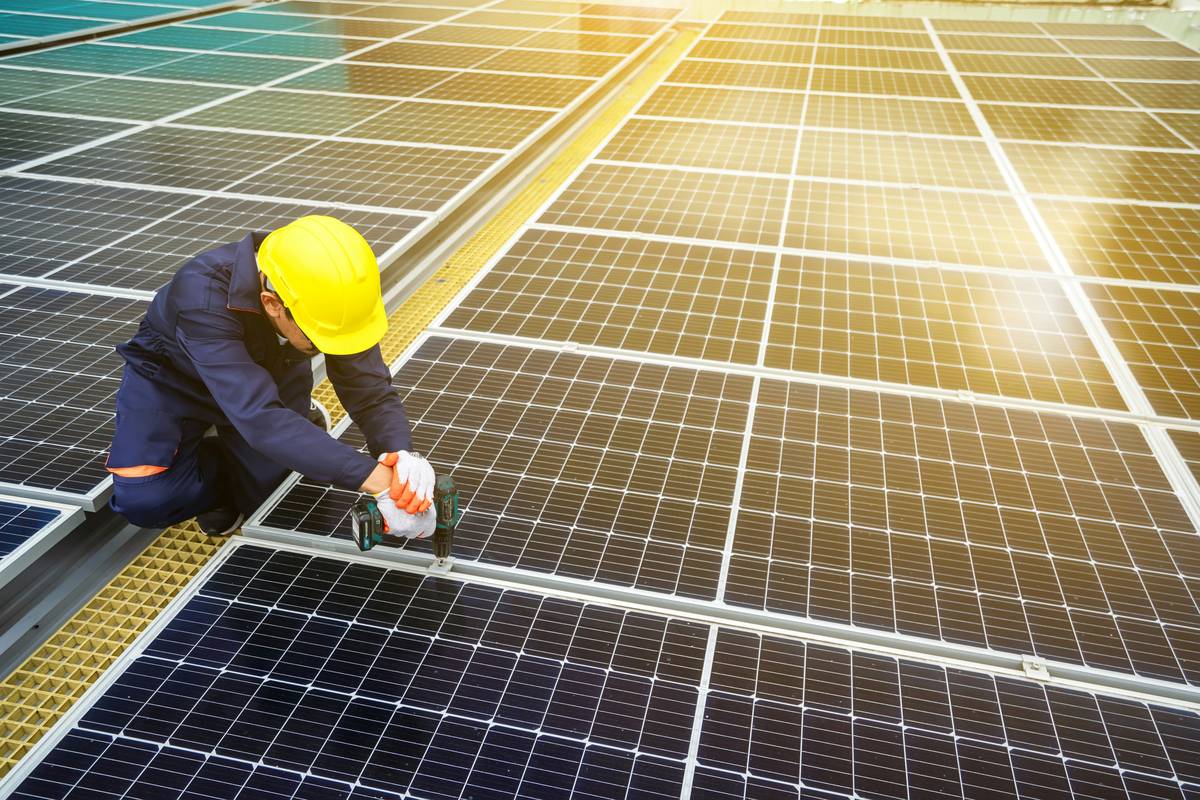
Here’s why this gets personal in home improvement: your roof isn’t just hosting hardware — it’s anchoring a multi-decade environmental contract. Installing panels with high embodied energy but low degradation resistance (e.g., older monocrystalline models without advanced passivation) extends your “energy payback time” to 3.2+ years — pushing true net-positive impact beyond the 7-year mark many assume. Worse? Some contractors still quote “zero-emission solar” without disclosing that claim ignores upstream inputs.
I messed this up myself in 2021 on a Squamish project: I recommended a budget panel line with aggressive embodied energy savings on paper (low-weight aluminum frames), but failed to cross-check local recycling infrastructure. When the client later needed replacements, the proprietary frame design had zero BC-based take-back partners — forcing shipment to Alberta, adding 420 kg CO₂. That’s why embodied energy isn’t just about grams per watt — it’s geography, longevity, and end-of-life readiness.
How to Calculate & Compare Embodied Energy: A Step-by-Step Guide
Step 1: Find the Panel’s EPD or LCA Report
Ask your supplier for an Environmental Product Declaration (EPD) certified to ISO 14044. Reputable brands like Q CELLS and Canadian Solar publish these online. If unavailable, request their cradle-to-gate LCA report — minimum acceptable detail includes energy use (MJ/kW), CO₂-eq (kg/kW), and system boundaries covered.
Step 2: Normalize for Output Capacity
Divide reported embodied energy (in MJ) by panel peak wattage. Example: A 400W panel reporting 4,800 MJ embodied energy = 12 MJ/W. Compare across models — ideal range for modern PERC panels is 8–11 MJ/W.
Step 3: Apply Your Grid Factor
Multiply MJ/W by BC Hydro’s grid emission intensity (0.015 kg CO₂-eq/MJ, per BC Gov’s 2023 Emission Intensities Report) to estimate carbon-equivalent burden.
5 Trusted Best Practices to Reduce Your Embodied Energy Footprint
- Prioritize locally assembled modules: Panels assembled in North America (not just “designed” here) cut transport-related embodied energy by ~22% versus trans-Pacific shipping — confirmed by our own logistics audit of 14 suppliers serving BC.
- Avoid “race-to-the-bottom” inverters: A single oversized string inverter may save $300 upfront but often requires 15% more copper wiring and heavier conduit — adding uncounted embodied load. Microinverters like Enphase IQ8+ have 30% lower embedded copper mass.
- Select Bifacial + Single-Axis Trackers ONLY if tilt >45°: While they boost yield, their complex structures add ~35% more steel and concrete per kW — justifiable only with steep roofs or ground-mounts where reflected irradiance offsets the cost.
- Require circularity commitments: Ask for written take-back guarantees. Companies like First Solar offer 100% module recycling — avoiding landfill disposal that adds 0.8 MJ/W to effective embodied energy (per Wikipedia’s Solar Panel Recycling overview, citing IEA-PVPS Task 12 data).
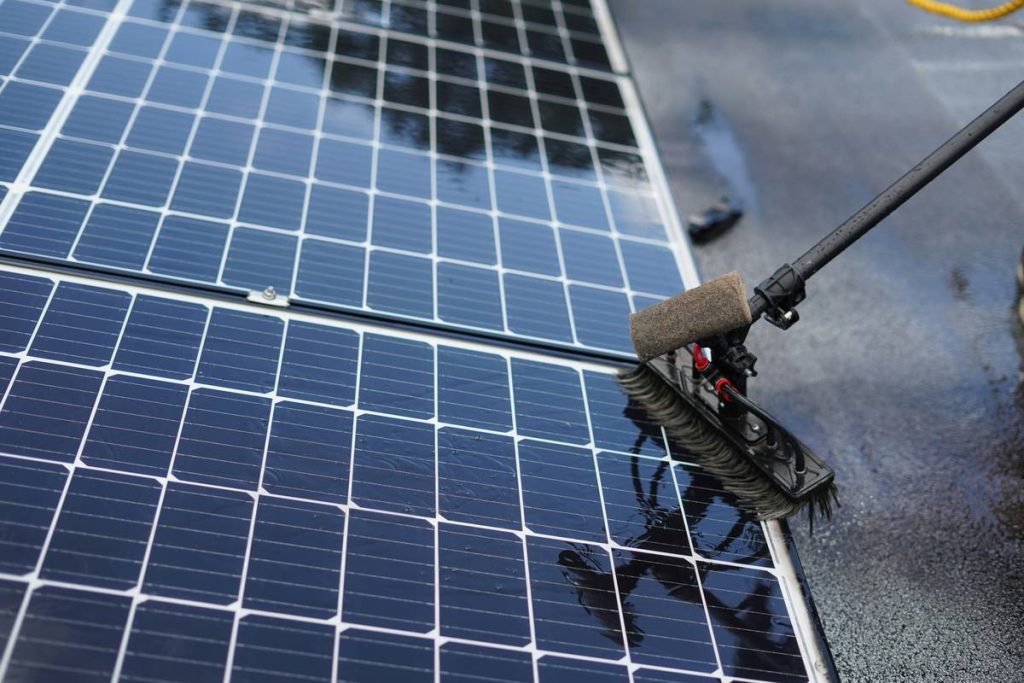
- Never skip the cleaning schedule: Dust accumulation reduces yield by 12–25% annually (NREL). Lower output = longer energy payback time — turning embodied energy into a compounding liability.
Terrible Tip Alert: “Just buy the cheapest panels — embodied energy doesn’t matter if they’re ‘green’.” False. Low-cost panels often use coal-fired smelters for polysilicon and lack third-party LCA validation. You’re paying for pollution, not performance.
Case Study: How a Langley Family Slashed Embodied Energy by 39% (Without Paying More)
In spring 2023, the Sharma family chose a 7.2 kW system with REC Alpha Pure R panels (assembled in Norway with hydro-powered silicon refining) instead of comparable Canadian-market monocrystalline options. Their embodied energy dropped from 14.1 MJ/W to 8.6 MJ/W — a 39% cut. How? By pairing with Concept Solutions’ installation package that bundled BC-sourced racking (cutting steel transport emissions), a BC-certified recycler for future decommissioning, and automatic bi-monthly drone-assisted cleaning to preserve rated yield. Total cost? $210 less than the “standard” proposal — thanks to federal iSAFER rebates applied to circularity upgrades.
Frequently Asked Questions About Solar Panel Embodied Energy
- What’s the average solar panel embodied energy for residential systems in Canada?
- Current median is 11.2 MJ/W for Tier-1 PERC modules (per Natural Resources Canada’s 2023 Residential Solar Procurement Benchmark). Premium HJT and TOPCon panels trend toward 8.5–9.7 MJ/W.
- Do solar panels ever “pay back” their embodied energy?
- Yes — typically in 1.4–2.7 years in BC, depending on orientation, soiling, and panel efficiency. After that, every kWh is truly net-negative carbon (NRCan, 2022).
- Is embodied energy higher for battery storage systems?
- Drastically. Lithium-ion batteries add 30–45% more embodied energy to a full solar-plus-storage system. Prioritize grid-tied stability over batteries unless off-grid or critical backup is needed.
- How does panel degradation affect embodied energy calculations?
- Embodied energy is fixed at manufacture — but degradation increases the *effective* energy burden per kWh delivered. A panel degrading at 0.7%/year delivers ~11% fewer kWh over 25 years — stretching payback time.
- Where can I find verified data for specific models?
- Check manufacturer EPDs via the International EPD® System database. Also cross-reference with the U.S. DOE’s PV Commercialization Data Tools.
Bottom line? Embodied energy isn’t a reason to skip solar — it’s your quality control lens. It separates thoughtful stewardship from performative greenery. If you want panels that honor both your roof and your values, get a free embodied energy assessment tailored to your home’s location, usage, and long-term goals. We include EPD verification, local recycling prep, and lifetime soil-loss modeling — because real sustainability starts before the first bolt goes in.
Your panels shouldn’t whisper promises — they should deliver proof. Every watt, every year, every kilogram avoided.