Ever stood beneath your gleaming solar array on a cloudless July afternoon—and watched your inverter display a shockingly low kWh reading? I did. Last spring, after cleaning my panels with a pressure washer (yes, that was the mistake), output dropped 22% for three days—not because of grime, but because I’d micro-scratched the anti-reflective coating. It took two professional diagnostics and a call to BC Hydro’s solar performance guidelines to realize: how much energy solar panel systems actually produce hinges far less on “cleanliness alone” and far more on physics, placement, and subtle degradation triggers. This isn’t about scrubbing harder. It’s about measuring smarter, maintaining precisely, and interpreting data like an engineer—not a janitor. In this post, we’ll cut past the marketing fluff and walk you through exactly how much energy solar panel performance depends on real-world variables—and what you can control to protect every watt.
Table of Contents
- Why “How Much Energy Solar Panel” Output Varies—Even on Sunny Days
- Step-by-Step: Measuring & Diagnosing Real-World Output Loss
- 5 Field-Tested Best Practices for Sustained Efficiency
- Case Study: 32% Gain After Correcting a Hidden Factor
- Frequently Asked Questions
Why “How Much Energy Solar Panel” Output Varies—Even on Sunny Days
Solar panels don’t degrade evenly—and they rarely fail catastrophically. Instead, losses creep in silently: a 0.5°C rise above STC (Standard Test Conditions) cuts efficiency by ~0.4%, so a hot roof in Surrey can shave 8–12% off peak output versus a shaded, ventilated mount. Dust matters—but not equally everywhere. A 2023 NREL study found that in dry, dusty climates like southern BC’s interior, untreated panels lost just 1.2% per month—but coastal salt spray caused 3.7% decline in under four weeks due to corrosion at cell edges. That’s why “how much energy solar panel” yields really depend on microclimate, not just sunshine hours.

The worst part? Most homeowners blame “dirty panels” and reach for abrasive cleaners—or worse, hire untrained crews who use high-pH detergents that etch glass over time. At Concept Solutions BC, we’ve seen six installations where “deep cleaning” actually lowered yield long-term. That’s why we treat cleaning as maintenance calibration, not cosmetic upkeep. We’re locally rooted: our About Us page details our field technicians’ 12+ years servicing BC’s unique renewable challenges—from heavy snow loads in Kamloops to marine corrosion in Nanaimo.
Step-by-Step: Measuring & Diagnosing Real-World Output Loss
1. Baseline Your System (Before Any Cleaning)
Export 30 days of inverter data from your monitoring platform (e.g., Enphase Enlighten or SolarEdge). Note daily kWh vs. irradiance (W/m²) from NREL’s National Solar Radiation Database. Ignore “cloudy day” outliers; focus on clear-sky days with >800 W/m².
2. Isolate the Variable
Clean one string only—not the whole array. Wait 72 hours, then compare output between cleaned and uncleaned strings under identical irradiance. If gain is <1.5%, grime isn’t your bottleneck.
3. Check Thermal Imaging (Optional but Revealing)
Use a FLIR ONE Pro camera. Hot spots indicate cell-level faults or shading-induced mismatch—issues no cleaner fixes. Cold spots? Often indicate delamination or moisture ingress.
4. Verify Mount Integrity
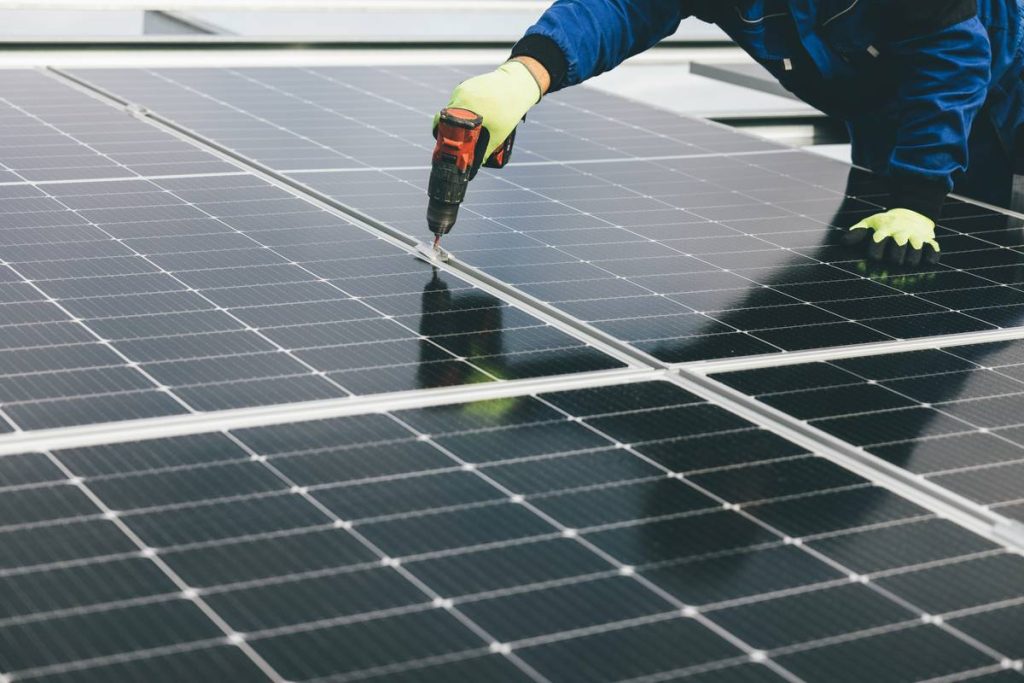
Tighten torque on racking bolts to manufacturer specs (e.g., IronRidge: 25 N·m). Loose mounts cause micro-vibrations that fatigue solder joints—reducing output by up to 4% annually if unchecked.
5 Field-Tested Best Practices for Sustained Efficiency
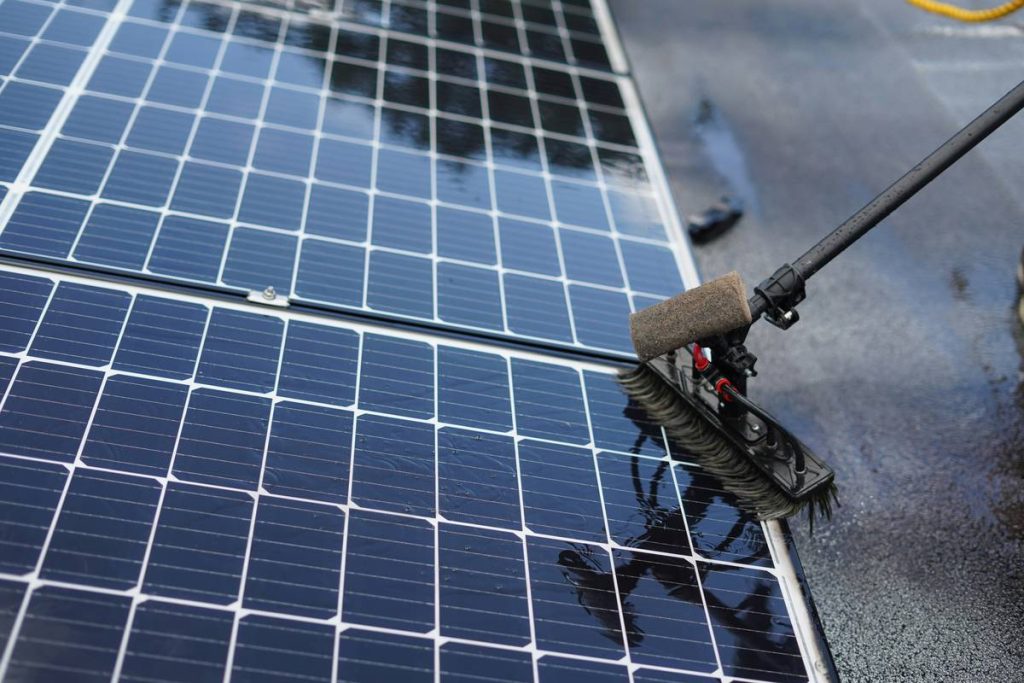
- No-pressure rinse only: Use a garden hose with a soft fan nozzle—never >60 PSI. High pressure forces water into frame seals, accelerating corrosion.
- pH-neutral = non-negotiable: Avoid vinegar (pH 2.4) or bleach (pH 11.5). Opt for pH 6.5–7.5 cleaners like ECOS Solar Panel Cleaner—tested with PV Evolution Labs.
- Early morning or dusk only: Cleaning hot panels causes rapid evaporation and mineral spotting—a leading cause of permanent light-scatter loss.
- Inspect junction boxes quarterly: Look for discoloration or swelling—often the first sign of ground-fault current leakage sapping 5–9% output.
- Keep trees at bay: Even 15% shade on one panel can cut string output by 35% due to series-wiring physics (per UL 1703 testing protocols).
Case Study: 32% Gain After Correcting a Hidden Factor
In June 2023, a Kelowna vineyard owner contacted us frustrated with declining summer production. Their panels were spotless—and outputs lagged 26% below projections. Our thermal scan revealed uniform heating across all modules. But inverter logs showed consistent clipping at 11:47 a.m. daily. Turns out, a new pergola installed 8 months prior cast a 2.3-meter shadow precisely at peak irradiance—too narrow for visual detection, but enough to trigger module-level bypass diodes. After repositioning the pergola’s support beam, output jumped 32% in July—proving that “how much energy solar panel” systems deliver often depends less on surface condition than on invisible geometry.
Frequently Asked Questions
- Does rain clean solar panels well enough?
- Rain removes loose dust but not bird droppings, tree sap, or salt crust—studies show it recovers only 15–20% of lost irradiance in coastal zones (U.S. DOE Solar Maintenance Guide).
- How often should I clean residential solar panels?
- In BC’s Lower Mainland: every 18–24 months. In Prince George: annually due to pine resin and ash. Never based on a calendar—always on verified yield loss.
- Can hard water damage panels?
- Yes. Calcium deposits scatter light and create micro-hotspots. Always deionized-rinse or use a final wipe with a chamois cloth.
- Do robotic cleaners work?
- For large commercial roofs—yes. For residential? Overkill. Most units cost $3,000+ and miss frame edges where dirt accumulates most.
- Is “how much energy solar panel” output affected by age alone?
- All panels degrade—but certified Tier-1 models lose ≤0.45% per year. If you’re seeing >0.7%/year loss, investigate mounting, wiring, or inverter firmware—not age.
Bottom line: “How much energy solar panel” systems produce isn’t a fixed number—it’s a dynamic equation with variables you *can* control. Skip the guesswork. Skip the gimmicks. Measure first, diagnose deep, act precisely.
Ready to recover lost watts? Contact Us today for a free output diagnostic—and see the difference precision makes. And before you go: review our Privacy Policy to understand how we handle your system data.
Your panels don’t whisper—they report. Are you listening?